In The Gravest Extreme by Massad F. Ayoob – Part I

Anyone and everyone thinking of carrying a concealed firearm MUST read this short but powerful book. The subtitle is: The Role of the Firearm in Personal Protection.

Massad F. Ayoob is the only son a jewler who had been maimed for life by an armed criminal. His farther returned fire killing one of the criminals and crippling the other. Massad spent his early years becoming an expert marksman. He joined a New England municipal police department in the early 1970s and became a certified weapons instructor with the Advance Police Training Program of New Hamshire. Today Massad is recognized internationally as one of the world's leading authorities on police weaponry.

In the first section of the book, Massad's specific purpose for writing  is clearly identified: "Every other book on self-defense with firearms has begun with the draw and ended with the last shot. Ayoob sought to teach the armed public what would happen to them afterward and what they had to think about before."

Massad works in the criminal justice system. He has been a street cop, prosecuting officer and certified expert witness in many cases involving weapons and armed citizens. He knows what he is talking about having lived it for many years. Anyone who owns a gun and is thinking of using it in self-defense also needs to know what Massad is talking about.

Principles identified in the book are based on law (ever changing as we know) and the mood of the American courts. Ayoob doesn't necessarily agree with all of them, but anyone who carries concealed must know what they are up against.

The reason for the book in Ayoob's words: "This book was written to correct the dangerous misconceptions on the part of many as to when they can exert the deadly force of the guns they have decided in advance that they may use for self-protection. Too many people believe they can shoot suspected criminals when, in fact, they have no right to do so. Too many people are incapable of using their guns in a combat situation with sufficient expertise to either prevent an armed criminal from taking innocent lives, or to be sure they do not hit bystanders with their own stray bullets. Both knowledge and ability should be pre-requisites for carrying a gun in public. It is my personal opinion that every applicant for a carry permit should pass a written examination on self-defense and lethal force laws, and a close range qualification run over a combat pistol shooting course." (Underline added).

This book is available on Amazon from 3rd party sellers. As a result, the price is inflated. You should try your local book store for available and a more reasonable cost.



Basics of self-defensive using a Handgun

The Basics
of self-defensive using a Handgun
class in a Non-NRA course. This course is for those who have experience shooting their handgun and want now to effectively carry it concealed.

Why? In an atmosphere of uncertainty and fear, knowing how to confidently defend oneself is reassuring. Many are taking advantage of the non-resident concealed carry licenses being offered by states such as Florida, Utah, Virginia, etc. Our class covers the details on these non-resident licenses.

How? The class starts at the very beginning providing the opportunity to try various holsters to find the one that fits your needs. Many handgun owners are frustrated trying to select and use holsters as there are limited opportunities to try them on.

Learning to draw and shoot from a holster is covered and practiced extensively. Laser cartidges (that chamber in your handgun) are initially used shooting at targets that highlight hits. Extensive practicing is done with the laser cartridges before moving on to live fire. 

Details on the class including topics covered, pre-requisites, duration and cost can be found on out website — http://www.kjd-firearmstrainingllc.com. Please be sure to read. 

Purchasing a Handgun in New Jersey & Getting the one you want!

Purchasing a handgun in New Jersey involves several steps.

1. Obtain from your local police department the "Application for Firearms Purchase Identification Card and/or Handgun Purchase Permit". To purchase a handgun in New Jersey two documents are needed – a Firearms Purchase Identification Card and a Handgun Purchase Permit. The one form can be used to obtain both documents. Fill in the form and return it to your local police station records department. On average, it has been taking  4 months to obtain these documents.

Note: Once you obtain your Handgun Purchase Permit, you will have a total of 180 days to purchase a handgun. The permit is initially good for 90 days but can be renewed for another 90.

2. Most Important: Attend a handgun training class. This class will expose you to a variety of handguns – revolvers and semiautos. It will teach you how to hold, aim and shoot a handgun. After the class, you will have an idea of the type of handgun you're interested in. Stay in contact with your instructor; you may want feedback on your handgun selection. Also the instructor may have other handguns to try.

3. Continue researching the handguns you like checking out forums, YouTube, manufacturers websites, etc. You will find feedback from others who may own or have owned the handgun(s) of interest. Visit guns stores and discuss availability. Handguns are in demand. Most gun stores are willing to work with you coordinating ordering with the arrival of your permits to help you obtain the handgun(s) you want.

4. ImportantContinue to shoot handguns. There are ranges that rent handguns and range time. It is very important that you shoot several handguns as the ones you like may not be available when you're ready to purchase. You need a list with a 1st, 2nd and 3rd choices.

Very Important: Be sure to shoot a handgun before you purchase it. If not the exact model you want, then something very similar.


Training for Concealed Carry and Self Defense

Are you intending to carry a handgun concealed? If you are, you need to obtain adequate training.

Prerequisities to Concealed Carry training1. Handgun Training covering proper safety, grip, aiming, trigger squeeze and follow through (among other things). 2. Shooting several hundred rounds with the handgun you intend to carry. In short, you need to know how to shoot and have proficiency with your handgun. Note: It is very important to state the obvious – Full sized handguns are not suitable for concealed carry.

Training in the law: This is critical and especially important for "out-of-state" concealed carry licenses such as those issued by states of Florida, Utah, Virginia and several others. Each of these states have specific concealed carry requirements that you must know and naturally, obey. Read the fine print!

Training in the selection and use of a holster: Unfortunately most gun stores do not let you unpackage and try on the holster. So figuring out which one is best — most comfortable and useable with your handgun, is no small task. Most concealed carry training provides several different types of holsters for student use.

Training in drawing from the holster: Learn the proper techniques and practice very often. Practice consists of Dry Firing and Live Firing. Dry firing can be done with snap caps or laser cartridges that project a red dot onto a target.  At a minimum, practice a half hour twice a week. Live Firing from a holster is a challenge as most ranges in New Jersey do not allow holsters. 

USPSA – United States Practical Shooting Association. United States Practical Shooting Association website provides all the details. In summary it is competition shooting using a holster and multiple magazines. It's a great way to practice safe and effective drawing from the holster. Some ranges in northern NJ have USPSA matches open to the public. Shongum Sportsmen's Association in Hackettstown, NJ has USPSA matches each month. Details are on their website. Shongum Sportsmen's Association.

Concealed carry and self-defense training are other ways to practice and reinforce skills. It is very important to take a course and do it more than once. KJD Fireams Training will have a "Basics of Self-defense using a Handgun" in the near future. Details will be on the website:

KJD Firearms Training


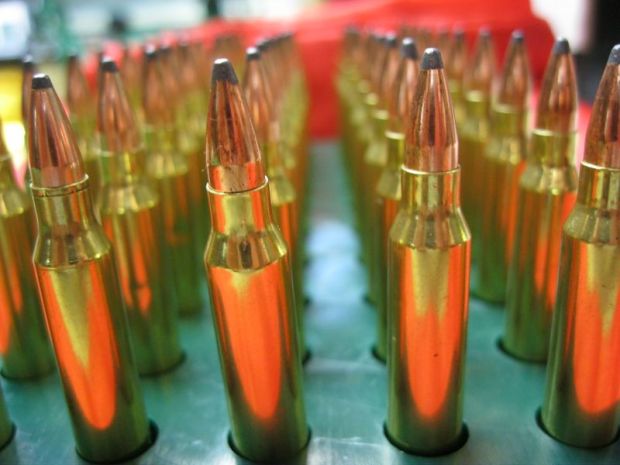
Reloading .223 Remington

AR15s are popular and their popularity is increasing.  AR15 shoot .223 Remington caliber ammo and some shoot 5.56 MM. These two rounds are different. Information on the differences can be found by doing a simple search on the internet. This post is focused on some considerations for reloading .223 Remington. 

If you are considering reloading, please obtain the proper training. Money spent on training may save your life and probably many dollars down the road.

The price of the .223 Remington, some say, is relatively cheap ($7 to $8 for 20 rounds and cheaper if you buy 500 or 1000 rounds) so why bother reloading?  True now but given the anti-gun enviornment we live in, perhaps this may not be true for long. 

The .223 Remington shell is thin and a bit longer (appox 1.760") than a 357 Magnum shell (appox 1.282"). Diameter of a .223 is appox .253" and the 357 is appox .378". When the .223 shells hit the ground they get nicked and dented a bit. So if you retrieve shells from the range be sure the shells are suitable for reloading. 

Reloading allows you to try different combinations of smokeless powder and bullets. Reloading data books identify how to determine a good combination. Based on my research, I decided on Hodgdon's Varget smokeless powder and Hornady's Varmint .22 cal. 55 gr. bullets. These were good initial choices. However, the Varget powder is stick powder and it sticks at times in the powder drop. So it takes some patience and persistence to work through the loading of the powder.

As it is for all rifle rounds, the shells have to be trimmed and deburred (inside and out). This is the most time consumming part but also the most important. The primer pockets should be cleaned and trimmed if needed — ensure they are round. 

I use Redding dies for the De-capper / Sizer, Seater and crimp. Crimp isn't necessary but it gives a nice finished feel to the round. Redding dies are well made and reliable. The company, located in Cortland, NY., is very customer focused.  My experience has been that the better quality dies perform better and last longer.

My website (kjd-firearmstrainingllc.com) contains more details on reloading as well as a link to the NRA Training website to sign up for a reloading class.


IMG_0751


The 2nd Amendment — a right threatened with misinterpretation

Professor Joyce Lee Malcolm in 1996 wrote a very interesting book titled: "To Keep & Bear Arms:  The origins of an Anglo-American Right".  This book is a very interesting read and is available on Amazon.  I would like to quote a small section of her work as it has proven to be prophetic.

If the government and the people in their wisdom come to the conclusion that no need for the right of the people to be armed exists, or that such a right does more harm than good, the amendment is the course that should be followed. While it is unconstitutional to legislate a right out of existence, this particular right is threatened with misinterpretation to the point of meaninglessness. Granted, this is a far easier method of elimination than admendment, being much quicker and not requiring the same rigid consensus or forthright discussion of it's constitutional relevancy. But it is also the way of danger. For to ignore all evidence of the meaning and intent of one of those rights included in the Bill of Rights is to create the most dangerous sort of precedent, one whose consequences could flow far beyond this one issue and endanger the fabric of liberty.  (p.176-7).

She goes on to say that the forefathers worked and provided these rights for a reason. They were men of intellect and had all studied history and past civilizations. As such, we owe them considered attention before we disregard a right they felt imperative to bestow on us.

Society today has many individuals who violate the our rights and the rights of our country — individuals who are insane. The problem is not the rights, it's the individuals. Eliminating our rights is not going to change individuals.  Our country, any country, has problems dealing with erratic and insane behaviour.  But we want solutions and the politicans are more than eager to be the heros and step in with their "solutions" so that they can bullhorn their achievements and win re-election. 

Guns do not kill, people do. Spoons do not make you fat, eating does. Automobiles do not kill, drunk drivers do. Simplistic solutions do not solve problems, they make them worse. And far worse, they threaten our constitutional rights.


Considering a .22 caliber handgun

There are several reasons for purchasing a .22 caliber handgun.

First, a .22 caliber will help you learn trigger squeeze. Trigger squeeze is a vital shooting fundamental and, with any sport, fundamentals needs to be practiced frequently. There is no recoil with a .22 handgun and so you can concentrate on trigger squeeze, grip, aiming and follow through.

Second, the ammo is inexpensive. Compared to other larger calibers, the .22 ammo is inexpensive and consequently, you will shoot frequently.

Every manufacturer makes a .22 caliber handgun. A major consideration is take down and cleaning. .22 handguns need to be cleaned frequently. Be sure you can take apart, clean and re-assemble your .22 before you invest in it. Check the manufacturer's website for any videos they may have and YouTube contains a number of field stripping videos.

Cartridge Comparison Guide — Part II

In the first post, it was mentioned that there are examples provide in the Cartridge Comparison Guide (CCG). The Chapter 4 example walks through "a cartridge for a 14 or 15 year old or an inexperience beginner hunter with little experience shooting or hunting" (CCG p. 25). The example covers the "Who, What, Where and Why Questions".

Let's detail the Who, What, Where and Why Questions of the example. This information is taken from the CCG on page 26 and following.

Who will use the cartridge?

  • 14-15 year old or an inexperienced hunter
  • Hunting small to medium game
  • Inexperienced shooter — first hunting rifle & cartridge combination

Where will the cartridge be used?

  • Foothills
  • Rolling mountainous terrain
  • Flats & prairies

 What purpose will the cartridge serve?

  • Hunting at distances less than 200 yards
  • Used as the shooter's first hunting rifle
  • Used to harvest small to medium game

Why will this cartridge be used?

  • To develop the ability to handle a rifle
  • For a person with little or no experience
  • For an animal requiring enough penetration to incapacitate the animal
  • For training and target shooting 
  • To provide flat, repeatable trajectory
  • To improve accuracy
  • To provide low level of recoil

Appendices A & B in the CCG describe animal structure and the recommended energy levels to use when harvesting Small, Medium and Smaller-Big Game animals. These appendices recommend that a cartridge uses at least a 70 grain bullet and delivers a minimum of 1,000 ft-lbs of energy at 100 yards (These are minimums). It is better to provide more energy on target at 200 yards.

To accomplish this energy level, we must generate a minimum of 1,500 to 1,600 ft-lbs of energy at the muzzle to overcome the energy loss due to drag and air resistance. (Lighter, smaller caliber bullets lose around 15 – 25% for each 100 yards of flight). Thus for this example, we will select a cartridge that generates energy greater than 2000 ft-lbs at the muzzle.

These appendices also outline a rule-of-thumb for hunting medium game, which states the the bullet weight is calculated by taking 66-110% of the aminmal weight. This will give us a good bullet weight to harvest the animal. For this example, we use a middle range of both animal and bullet weights. We will target a 125 to 160 pound animal weight (this is an average weight for deer) and multiply this by the average of 80% to determine the proper range in bullet weight. We can then use these figures to establish a range for bullet weight of approximately 100-130 grains.

At this point, let's list the acceptable range of bullet weight, recoil, velocity, and bullet energy to establish a basline for this search. These numbers are:

  • Bullet weight between 100 & 130 grains
  • Recoil energy less than 12 ft-lbs
  • Velocity greater than 2,900 ft/sec
  • Bullet energy at the muzzle greater than 2,000 ft-lbs

As we narrow the search we should begin prioritizing our criteria to determine the most important criteria. For instance, to encourage good accuracy, shot placement and control for a young, inexperienced shooter, our first and most important criteria may be to keep the recoil energy below 12 ft-lbs.  Second, we will want to keep the bullet energy at the muzzle abouve 2,000 ft-lbs to provide enough energy to ethically harvest small to medium sized game at distances out to 200 yards. Third, we should use a bullet weight that is appropriate for the type of game animal we intend to harvest (we have already determined that this is between 100-130 grains). Finally, we should use a cartridge that produces velocities greater than 2,900 ft/sec. This final constraint may have a little more flexibility in this example sinc a velocity of 2,800 ft/sec is still fast enough to allow the shooter to easily predict the bullet trajectory out to 200 yards.

 After using the criteria in the notebook to look at each qualified cartridge in Table-1, we have found 3 cartridges that will be the best fit for this youth. They are the 257 Roberts, 25-06 Remington and the 260 Remington. Any of these cartridges would be a good choice, however the 25-06 appears to be the best choice.

Despite all the accolades or criticism any specific cartridge may receive, experienced shooters will tell you that "Time on the trigger" is the ultimate tell all if you have made a good choice in your cartridge selection. The most important parameters for successful, ethical and enjoyable hunting include: knowing the way your rifle shoots, practicing at your desired distances, and having the most appropriate load for your cartridge, game animal and your havesting method. This is very sound advice!


Cartridge Comparison Guide

The Cartride Comparison Guide (CCG) copyright @ 2009 by Chamberlain Development provides "Better understanding (of) cartridge performance empowering the reader to select the best cartridge for their personal shooting requirements."  (cartridgecomparisonguide.com).

This Guide is a wealth of information benefiicial to any serious firearms enthusiast. 

"This manual will help you gain the maximum benefit from a personalized cartridge selection. It will also help you understand and compare cartridge capabilities and give you confidence in your personalized cartridge choice". (CCG p.1).

"Rifle and cartridge selections involve highly personal choices. Purpose, performance, style, comfort and ease of use should all be considered. There is much written about how properly select a rifle. However, there is a void of information regarding cartridge comparison and selection. Cartridges do not typically get the same high level of scrutiny as rifles; when, in reality, this selection should receive as much consideration as the rifle itself. This is why we have written this manual. This Guide fills the void of information pertaining to cartridge performance potential, comparative data and selection criteria. It also provides our readers with discussion and analytic tools that will help them refine their cartridge selections to best meet their individual needs and expectations." (CCG p. 5)

As is stated often in the Guide, THIS IS NOT A RELOADING MANUAL. "The load data presented excludes powder measures. The data is intended to create a VIABLE COMPARISON of cartridge performance. Cartridge performance and load data is constantly evolving. This Guide is a 'snap shot in time' of the data available to the public." (CCG p.1)

In Chapter 3 and 4, there are specific examples that help the reader understand how the Guide is used. The Chapter 3 example discusses optimizing your shooting capability and overall hunting experience. The hunting objective is to harvest an elk in moutainous terrain. It goes on to cover "Who, What, Where and Why Questions".

The Chapter 4 example walks through "a cartridge for a 14 or 15 year old youth with little experience shooting or hunting" (CCG p. 25). Again it covers the "Who, What, Where and Why Questions".

The Guide is spiral bound and neatly packaged. The detail tables are many and clearly presented. Good pictures are used often throughout.

This information is certainly critical for any hunter or someone thinking of getting into hunting. It is also very beneficial for target shooters wanting to understand what cartridge would be optimal for their shooting needs. It's a great investment!