
Rifle scopes work by magnifying an image and by placing your eye on the same optic plane as the target. Magnification works by bending light rays via a number of lenses within the scope, the higher the power of magnification, the longer the scope. Low powered rifle scopes are usually shorter and contain smaller lenses.
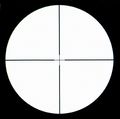
Most rifle scopes have a crosshair, a dot, a post or similar markings to help align the scope with the target. A reticle or crosshair is a cross shape (+) put on the center of the target. Rifle scopes help to eliminate the problems associated with open sights, and allow for precise shooting.
A novice shooter or an expert or anyone in between can benefit from a scope. It is a helpful tool for hunting and target practice. A scope sits on top of the rifle and allows the shooter to see very well at distances. The power of the scope can vary widely, from 1.5 times magnification to 50 times or more.
The better rifle scopes are light in weight, rugged and precise. When you first obtain the scope, it will need to be zeroed. This means that you'll need to determine how far off target the bullet hit and then adjust the scope accordingly. Scopes come with windage and elevation knobs which are used to adjust the scope. Bore sighting can help zero the scope as well as save you time, ammo and targets. See the "Bore Sighting" post.
You can certainly shoot without a scope but a scope will enhance your accuracy and enjoyment. Be sure to purchase a scope that is waterproof and fog-proof. This will ensure its use in all weather conditions and situations. There are many companies today that feature high quality rifle scopes at affordable prices.
When it comes to installing the scope, be sure to read the directions that come with it. Buy quality mounts, bases and rings – this is very important. Quality products are easier to install, hold up well and with the proper care, last longer. Once put on the rifle, check to ensure the scope is level and straight. Small levels can help with this. Look at the rifle and scope in several different ways – front, back & sides. Have someone else check it as well. Pick up the rifle and aim it. Be sure the scope is at least 3 inches from your face and that you can see the recticle clear when you rest your face on the comb of the rifle.
The real fun, of course, begins when you shot at the range. If you bore sighted, the amount of time, ammo and targets used for sighting in may be less. Sight in the scope at 25 to 50 yards. It will be much easier if there is another person checking the shots on target with a spotting scope. The whole process of sighting in the scope will take some time and patience as you adjust and readjust the windage and elevation knobs based on the hits on target.

 Ken DiStefano, Sr.